
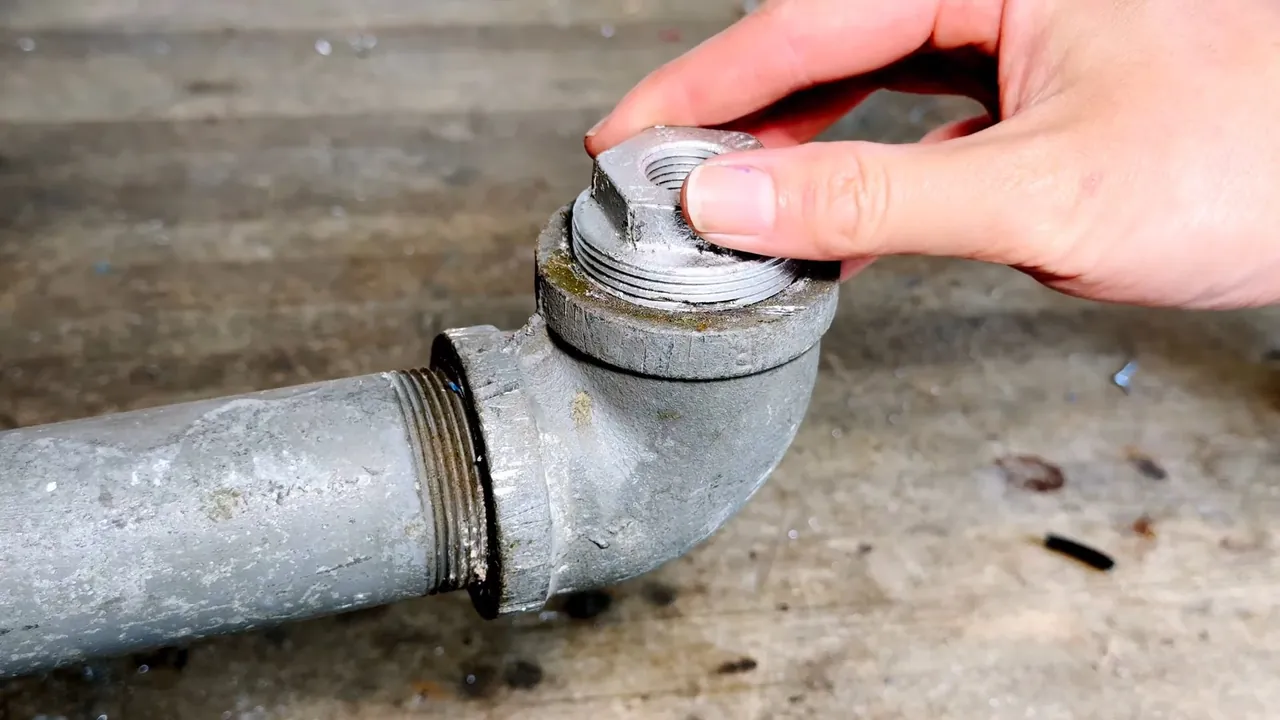
If your Wheat Ridge home was built before the 1960s, its original water supply lines are likely galvanized steel. After 60 to 100 years in service, these pipes reach a point where the question is no longer whether to fix them but whether to repair a failing section or repipe the whole system. Knowing which makes sense for your situation comes down to a few clear factors.
Galvanized steel pipe was the standard residential water supply material for much of the early and mid-20th century. It is steel pipe coated with a layer of zinc to resist corrosion. The zinc coating works well for decades, but it is gradually consumed, and once it is gone, the underlying steel corrodes from the inside. In Wheat Ridge's older homes, that process is now well advanced, and homeowners are increasingly facing the repair-versus-repipe decision.
How Galvanized Pipe Fails
Galvanized pipe fails through internal corrosion. As the protective zinc coating depletes, the exposed steel begins to rust. This corrosion does two things. First, it builds up as scale and rust on the interior wall of the pipe, gradually narrowing the bore and restricting water flow. Second, it weakens the pipe wall, eventually producing pinhole leaks and failures at threaded joints where the pipe wall is thinnest.
The mineral content of Consolidated Mutual Water Company water contributes to the interior scaling, compounding the corrosion already underway. Over the decades a Wheat Ridge home has stood, the combined effect of zinc depletion, steel corrosion, and mineral scaling progressively chokes the supply lines. By the time a home is 70 or 80 years old, the original galvanized supply is often delivering a fraction of its original flow capacity.
The Telltale Pattern
The signature symptom of failing galvanized supply is rust-colored water from the cold tap, particularly first thing in the morning or after the water has sat unused for several hours. The discoloration comes from rust particles that have accumulated in the pipe and are flushed out when flow resumes.
The Warning Signs
Reduced Water Pressure
The most common complaint is gradually declining water pressure throughout the home, especially noticeable at upper-floor fixtures and when multiple fixtures run simultaneously. As scale narrows the pipe bore, less water can pass through, and the pressure at the fixtures drops. This decline happens slowly enough that homeowners often do not notice until it becomes pronounced.
Rust-Colored Water
Rust-colored or brownish water from cold taps, particularly after periods of inactivity, indicates that the interior of the galvanized pipe is corroding and shedding rust particles into the water supply. This is distinct from drain discoloration and points specifically to the supply lines.
Recurring Pinhole Leaks
As the pipe wall thins from corrosion, pinhole leaks develop, often at or near threaded joints. A single pinhole leak can be repaired, but when leaks begin recurring at multiple locations, it signals that the pipe wall is uniformly thinned throughout the system and more failures are coming.
Uneven Hot and Cold Pressure
Sometimes one supply line corrodes faster than another, producing noticeably different pressure between hot and cold at the same fixture. This uneven degradation is another sign that the galvanized system is reaching the end of its service life.
Seeing rust-colored water or declining pressure in your Wheat Ridge home? We assess galvanized systems and lay out your repair and repipe options.
Call (303) 567-7524 · 24/7When Repair Makes Sense
Repair is reasonable in a limited set of circumstances. If a galvanized system is otherwise sound but has a single isolated failure, such as one pinhole leak at an accessible joint, repairing that specific point is a sensible response. Similarly, if a home has had partial repiping in the past and only a small section of original galvanized remains, addressing that section in isolation may be appropriate.
The key question is whether the failure is isolated or symptomatic of system-wide deterioration. A pinhole leak in a 1940s Wheat Ridge home with original galvanized throughout is rarely truly isolated. It is usually the first visible failure in a system that is uniformly corroded and will produce more failures soon. Repairing one point in that situation buys a short reprieve before the next leak appears elsewhere. Our pipe repair service handles genuinely isolated failures.
When Repiping Makes Sense
Repiping, replacing the entire supply system, is the right choice when the deterioration is system-wide, which is the typical situation for original galvanized supply in pre-1960 Wheat Ridge homes. The indicators that point to repiping rather than repair include: recurring leaks at multiple locations, pronounced and worsening pressure loss throughout the home, persistent rust-colored water, and simply the age of the system. When original galvanized supply is 70 or more years old and showing these signs, repiping addresses the root problem rather than chasing individual failures.
Modern repiping replaces galvanized steel with PEX, a flexible plastic supply piping that does not corrode and is not subject to the mineral scaling that affects galvanized. PEX repiping restores full water pressure throughout the home and eliminates the rust-colored water and recurring leaks. The transformation in water pressure is often dramatic, because the home is going from severely scale-restricted pipes to full-bore new supply. Our whole-home repiping service covers this process from assessment through permit coordination and installation.
The Cost Comparison Over Time
On the surface, repairing a single leak costs less than repiping a whole house. But the relevant comparison is not a single repair versus a repipe. It is the cumulative cost of repeated repairs on a failing system, plus the ongoing problems of low pressure and rusty water, versus a one-time repipe that resolves everything. For a Wheat Ridge home with system-wide galvanized deterioration, the repeated-repair path usually costs more over a few years than the repipe would have, while never actually solving the underlying problem. This is why, for genuinely deteriorated systems, repiping is generally the more economical choice despite the higher upfront cost.
What Repiping a Wheat Ridge Home Involves
For homeowners considering repiping, understanding the process helps set expectations. A whole-home repipe replaces the water supply lines throughout the house, from the point where water enters the home to each fixture. The work involves opening access points in walls and ceilings to route the new PEX supply lines, connecting them to fixtures and appliances, and then patching the access points. A repipe is a significant project, but a well-planned one minimizes the disruption by opening only the access points needed and routing the new lines efficiently.
The drain system is separate from the supply system, so a supply repipe does not address cast iron drain issues, which are a different project. Some Wheat Ridge homeowners with aging plumbing find that both the galvanized supply and the cast iron drain are reaching end of life around the same time, since they were installed together when the home was built. In those cases, coordinating the supply repipe and drain replacement, where it makes sense to do both, can reduce the overall disruption compared to doing them as entirely separate projects months apart. We assess both systems during an evaluation so you have the full picture.
Don't Wait for the Failure
One pattern worth avoiding is waiting until a galvanized system fails catastrophically before addressing it. A pinhole leak inside a wall that goes undetected can cause water damage, and a leak that lets go while you are away from home can flood the house. Recognizing the warning signs, declining pressure, rust-colored water, and the age of the system, and addressing them proactively lets you plan a repipe on your own timeline rather than reacting to water damage. For a home with clearly deteriorating galvanized supply, planning ahead is almost always less costly and less stressful than waiting for the emergency.
Key Takeaways
- Galvanized supply in pre-1960 Wheat Ridge homes corrodes internally, restricting flow and shedding rust.
- Rust-colored water, declining pressure, and recurring pinhole leaks are the main warning signs.
- Repair makes sense for genuinely isolated failures; repiping makes sense for system-wide deterioration.
- For old, uniformly corroded galvanized systems, a one-time PEX repipe usually beats repeated repairs on cost and results.
If your Wheat Ridge home is showing the signs of failing galvanized supply, an assessment tells you whether you are dealing with an isolated issue or a system that warrants repiping. We assess galvanized systems throughout Wheat Ridge and Jefferson County and lay out your options clearly. Call (303) 567-7524.