
Wheat Ridge, CO · Jefferson County · Est. Neighborhood
Plumbing Service in Historic Wheat Ridge: Cast Iron Drains and Sewer Repair on the 38th Avenue Corridor
Historic Wheat Ridge and the Ridge at 38 corridor contain the oldest housing stock in Jefferson County, with craftsman bungalows built from 1900 through the 1930s that still have their original cast iron drain-waste-vent systems. Cast iron pipes in this neighborhood are 90 to 125 years old.
Historic Wheat Ridge and Its Plumbing Heritage
The 38th Avenue Corridor: Wheat Ridge’s Original Residential Core
38th Avenue is the original main street of Wheat Ridge, dating to the city’s earliest development as a streetcar suburb west of Denver in the late 1800s and early 1900s. The residential streets running north and south from 38th Avenue through what is now referred to as Historic Wheat Ridge or the Ridge at 38 contain the oldest concentration of housing in Jefferson County outside of the City of Denver itself. Craftsman bungalows, Victorian-era workers’ cottages, and early 20th-century four-squares line blocks that have been continuously occupied for over a century.
The agricultural heritage that earned Wheat Ridge the designation “Carnation City” in the early 1900s, when the greenhouse industry along 38th Avenue supplied carnations to markets across the region, shaped the neighborhood’s character. The streets that once bordered working greenhouses are now shaded by elm and cottonwood trees that have grown for 80 to 100 years, creating a mature urban canopy that is part of Wheat Ridge’s Tree City USA designation and a significant factor in sewer lateral root intrusion throughout the neighborhood.
What 100-Year-Old Cast Iron Drain Systems Look Like Today
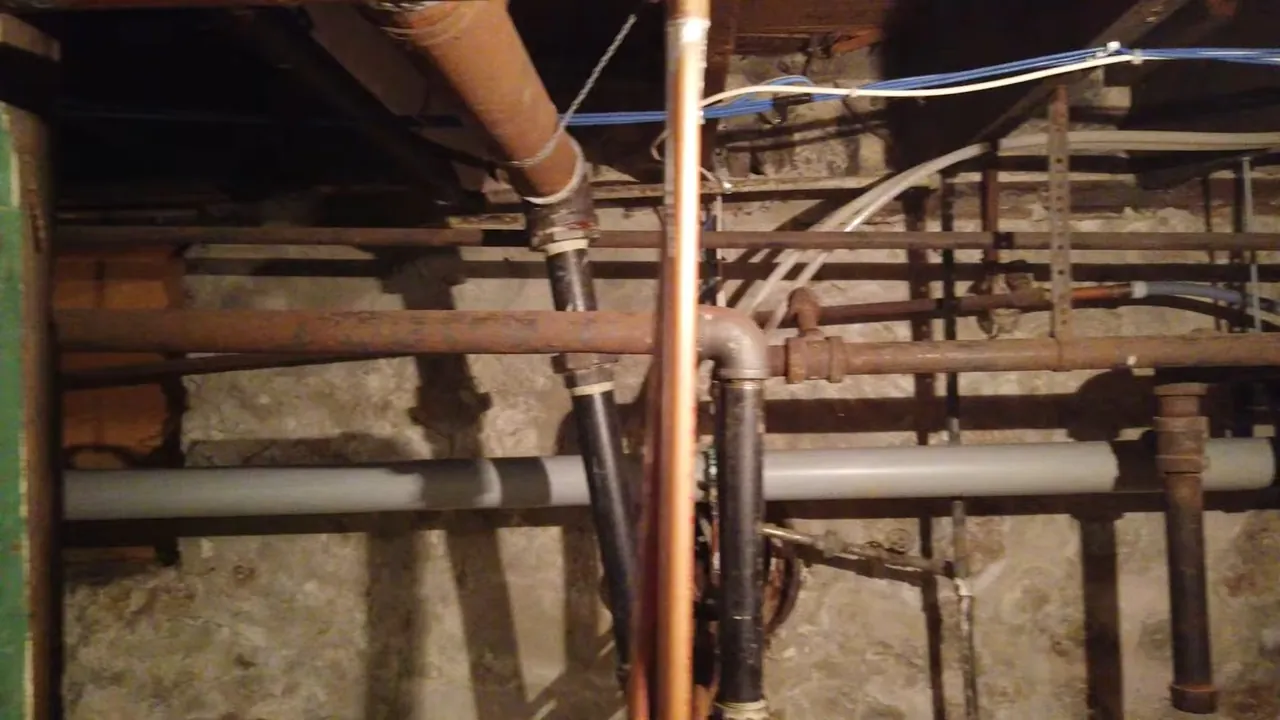
The cast iron drain-waste-vent systems installed in Historic Wheat Ridge homes from 1900 through the 1930s are now 90 to 125 years old. Cast iron corrodes from the inside out through a process called tuberculation, where iron oxide scale builds up on the pipe interior, progressively narrowing the bore and roughening the surface. At the 100-year mark, a cast iron drain pipe in a Historic Wheat Ridge basement crawlspace often shows bore restriction of 40 to 60 percent from internal scale, visible rust pitting on the exterior, and lead-caulked joints that have deteriorated to the point of allowing moisture infiltration and occasional sewer gas release. A camera inspection through a floor drain reveals conditions that surface symptoms like slow drains and occasional odor cannot fully describe.
Historic Wheat Ridge Service
Cast Iron Drain Replacement in Historic Wheat Ridge Homes
Pre-1920 Homes: The 100-to-125-Year Critical Cohort
Homes built in Historic Wheat Ridge before 1920 have cast iron drain pipes that are now between 100 and 125 years old. This is the most deteriorated segment of Wheat Ridge’s cast iron inventory. In this cohort, we commonly find: multiple rust-through perforations in horizontal drain runs, complete joint failure at hub connections where the lead caulk has gone from pliable to powder, and significant bore restriction in vertical stacks from accumulated scale that has never been professionally cleaned. These systems are past end of life, and persistent slow drains or recurring sewage odors in a pre-1920 Historic Wheat Ridge home are reliable indicators that cast iron drain replacement is overdue rather than optional.
1920s Through 1940s Construction: Still Past Design Life
Homes built in Historic Wheat Ridge from the 1920s through the 1940s have cast iron drain systems 80 to 100 years old. While slightly better than pre-1920 pipes, these systems are also past their 50-to-100-year design life. Cast iron pipe in this cohort typically shows significant internal corrosion, frequent joint deterioration, and lateral connections to clay tile sewer lines that have experienced the full effect of Jefferson County’s clay soil seasonal movement and the neighborhood’s mature root systems. A camera inspection of a 1930s Historic Wheat Ridge bungalow frequently reveals conditions that surprise homeowners who expected the drains to still have years of life remaining.
Sewer Line and Root Intrusion on 38th Avenue Corridor Streets
The mature elm and cottonwood canopy on the residential streets of Historic Wheat Ridge is one of the neighborhood’s most valued features. Those same trees create one of its most persistent plumbing problems. Root systems from trees planted 60 to 100 years ago have had decades to find the clay tile sewer laterals running beneath the front yards of properties along the 38th Avenue corridor. By the time a root mass is large enough to cause a sewage backup, it has often been growing in the lateral for years, progressively restricting flow and catching solids with each flush.
The City of Wheat Ridge sanitation main runs beneath the streets of Historic Wheat Ridge, and the clay tile or cast iron lateral connecting each home to that main is the homeowner’s responsibility. In Historic Wheat Ridge, many of those laterals are original installations from the 1900s through 1920s, making them 90 to 125 years old. The combination of a deteriorating lateral with 100-year-old tree root systems is the specific sewer line challenge of this neighborhood.
We clear root intrusion through hydro jetting and mechanical augering, assess lateral condition through camera inspection, and repair, reline, or replace laterals based on what the camera shows. For Historic Wheat Ridge laterals under established lawns and landscaping, trenchless CIPP lining is often the preferred repair where the pipe condition allows it, protecting the mature yard surface that is part of the neighborhood’s character.
Plumbing Services We Provide in Historic Wheat Ridge and Ridge at 38
We provide the full range of plumbing services to Historic Wheat Ridge homeowners, with a particular emphasis on the cast iron drain replacement, sewer line repair, and whole-home repiping that define the needs of the neighborhood’s pre-1940 housing stock. Our specific services in Historic Wheat Ridge include: cast iron drain-waste-vent assessment and replacement, sewer lateral camera inspection and repair, root intrusion clearing by hydro jetting and mechanical augering, galvanized supply line repiping to PEX, water heater repair and altitude-correct replacement, frozen pipe repair and prevention for crawlspace homes, and 24/7 emergency plumbing response.
For homeowners purchasing a home in Historic Wheat Ridge, a pre-purchase sewer camera inspection is essential. The oldest housing stock in Jefferson County has plumbing systems that standard home inspections do not adequately assess, and a camera inspection before closing gives buyers the information they need for negotiation and planning. We schedule pre-purchase inspections with attention to the real estate closing timeline and provide a clear, written summary of findings for use in the transaction.
We serve all of Historic Wheat Ridge and the Ridge at 38 corridor in ZIP code 80033, including the streets north and south of 38th Avenue from Kipling to Sheridan and the surrounding residential blocks that form Wheat Ridge’s original neighborhood. Call (303) 567-7524 to schedule service in Historic Wheat Ridge.
Further Reading
For more on cast iron drain systems in Wheat Ridge’s oldest homes: Cast Iron Drain Replacement in Wheat Ridge, CO. For early warning signs of cast iron failure: Signs Your Wheat Ridge Home Has Cast Iron Drain Problems.
Service Area Detail
Wheat Ridge ZIP Codes and Local Landmarks
Historic Wheat Ridge and the surrounding city core fall within two ZIP codes, one of which is administrative only.
Wheat Ridge City Hall, the Wadsworth Blvd commercial corridor, Anderson Park, Lutheran Medical Center, and neighborhoods built mostly from 1950s to 1970s brick ranch homes.
An administrative ZIP code used for P.O. Box mail only. It has no residential addresses and no service calls originate from it.
Common Questions
Frequently Asked Questions
Need a Plumber in Historic Wheat Ridge? Call Jefferson County's Specialists.
We serve the oldest housing stock in Jefferson County with focused expertise on cast iron drain replacement, sewer lateral repair, and repiping for pre-1940 homes on the 38th Avenue corridor. Available 24/7.
Call (303) 567-7524 · Available 24/7