
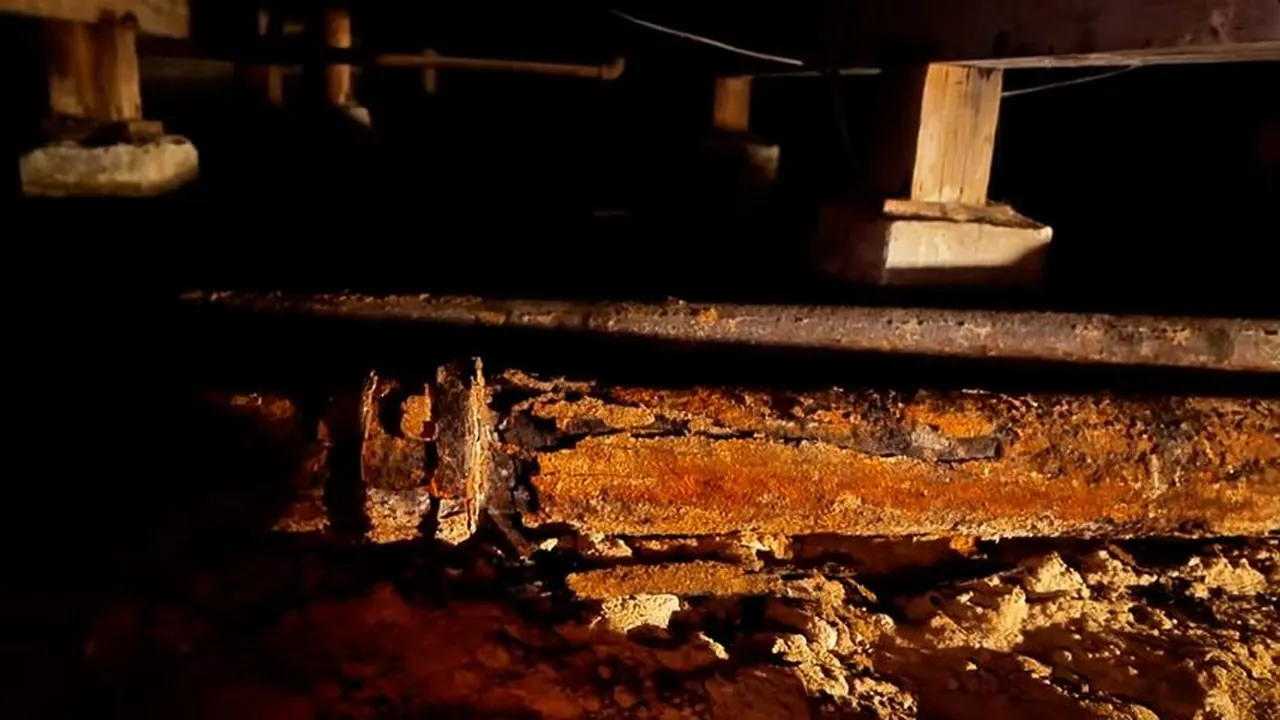
If your Wheat Ridge home was built before 1955, its original drain–waste–vent system is almost certainly cast iron. At 70 years and older, those systems are at or past their design life, and the warning signs of failure tend to arrive gradually enough that homeowners learn to live with them before recognizing the underlying problem.
Cast iron was the standard drain material for residential construction in the Wheat Ridge area from the early 1900s through the mid-1950s. It is a durable material, but it does not last forever. Cast iron drain pipe corrodes from the inside out, and the water chemistry, waste flow, and Jefferson County soil conditions in Wheat Ridge all contribute to a predictable pattern of deterioration. Recognizing the signs early gives you the information you need to plan a replacement on your own timeline rather than reacting to an emergency.
What This Guide Covers
- Why cast iron fails in Wheat Ridge homes
- The seven warning signs of cast iron drain failure
- What a camera inspection reveals
- When repair makes sense versus replacement
Why Cast Iron Drain Pipe Fails
Cast iron drain pipe fails through a process called tuberculation. As the interior surface of the pipe corrodes, it forms rough nodules of iron oxide that build up on the pipe wall. Over decades, this buildup narrows the effective diameter of the pipe, roughens the interior surface so that waste and solids catch and accumulate, and eventually perforates the pipe wall entirely. The lead-caulked joints that connect sections of cast iron pipe also degrade over time, opening gaps that allow sewer gas to escape and tree roots to enter.
In Wheat Ridge specifically, several factors accelerate this process. The mineral content of Consolidated Mutual Water Company water from the Clear Creek supply contributes to interior scaling. Jefferson County's expansive clay and shale soil shifts seasonally with moisture changes, stressing the joints of buried drain and sewer sections. And Wheat Ridge's status as a certified Tree City USA community means mature root systems are present throughout the older neighborhoods, actively seeking the moisture and nutrients that leak from deteriorating cast iron joints.
The Seven Warning Signs
1. Recurring Slow Drains That Return After Clearing
A single slow drain is usually a localized clog. But when multiple drains throughout the home run slowly, or when a drain you have cleared returns to slow flow within weeks, the problem is often the cast iron drain itself. Tuberculation narrows the pipe so much that even a freshly cleared drain cannot move water at full capacity. The slow flow is not a clog you can remove. It is the condition of the pipe.
2. Recurring Sewer Odors, Especially in the Basement
Cast iron drain systems develop a characteristic sewer gas smell as the lead-caulked joints deteriorate and the pipe wall corrodes through. The odor is often strongest in basements and crawl spaces, where the main drain stack and horizontal branch lines run, and it tends to be most noticeable after drains have been inactive for a period. If your Wheat Ridge basement has a persistent sewer smell that you cannot trace to a dry trap, deteriorating cast iron is a likely source.
3. Frequent Backups in the Same Location
Solids and waste catch on the roughened interior of a tuberculated cast iron pipe, building up over time into blockages that recur in the same location. If your home experiences repeated backups at the same fixture or floor drain, the underlying pipe condition is the cause, not a series of unrelated clogs.
4. Discolored Water at Drains
As cast iron corrodes, it can release iron oxide into standing water at drain openings, producing a brown or reddish discoloration. This is distinct from the rust-colored water from corroded galvanized supply lines, which appears at faucets. Discoloration at drains points to the drain pipe itself.
5. Mold or Moisture Near Drain Lines
A cast iron drain pipe that has corroded through, or whose joints have failed, leaks small amounts of water and sewage into the surrounding structure. This shows up as unexplained moisture, mold growth, or water staining on basement walls, crawl space surfaces, or the underside of floors near where drain lines run.
Why This Matters in Wheat Ridge
The basement-dominant housing stock in Wheat Ridge means most homes have their main drain stack and branch lines accessible in a basement or crawl space. This is actually good news for diagnosis: it makes camera inspection straightforward and lets a homeowner often see the early evidence of failure before it becomes catastrophic.
6. Cracked or Settling Floors and Foundation
A failing cast iron drain that leaks beneath a slab or into the surrounding soil can saturate the expansive clay soil under and around a Wheat Ridge foundation. Saturated clay swells and shifts, which can produce cracked floors, settling, or foundation movement. While foundation problems have many possible causes, a deteriorating drain line is one that is frequently overlooked.
7. Lush or Sunken Patches in the Yard
Where a buried cast iron or clay tile sewer lateral has failed, leaking water and nutrients into the soil, the grass above may grow unusually lush and green. Alternatively, as soil washes into a cracked pipe, the ground above may sink into a shallow depression. Both patterns in a yard over the path of the sewer lateral point to a failing line below.
Recognizing one or more of these signs in your Wheat Ridge home? A camera inspection gives you a definitive answer about your cast iron drain condition.
Call (303) 567-7524 · 24/7What a Camera Inspection Reveals
The only way to confirm the condition of a cast iron drain system is to look inside it. A sewer camera inspection runs a high-resolution camera on a flexible cable through the drain system, typically entering through the basement floor drain or an accessible cleanout. The camera shows the actual interior condition of the pipe: the degree of tuberculation and bore restriction, the location and severity of joint deterioration, any perforations or cracks, and the condition of the connection to the exterior sewer lateral.
A thorough inspection produces a tiered assessment rather than a simple pass or fail. Some sections of a cast iron system may be severely deteriorated and require immediate replacement, while other sections remain serviceable. Understanding this distinction lets you prioritize the work and budget appropriately rather than facing an all-or-nothing decision. You can learn more about the inspection process on our sewer camera inspection page.
Repair or Replace?
The decision between repairing a section of cast iron drain and replacing the system depends on what the camera inspection reveals. Isolated damage in an otherwise sound system can sometimes be addressed with a targeted repair. But when tuberculation and joint deterioration are widespread, which is typical in Wheat Ridge homes from the 1920s through 1940s, full replacement of the drain–waste–vent system is usually the more cost-effective path. Repeated point repairs on a system that is failing throughout add up to more than a planned replacement, and they do not address the underlying age of the system.
Modern replacement uses PVC or ABS drain pipe, which does not corrode and carries a much longer service life than the cast iron it replaces. Our cast iron drain replacement service covers the full process from camera inspection through permit coordination and installation. For homeowners weighing the materials and approach, the choice between replacement methods depends on the specific installation, and we walk through the options during the assessment.
Key Takeaways
- Cast iron drain systems in pre-1955 Wheat Ridge homes are at or past design life and fail in predictable ways.
- Recurring slow drains, sewer odors, and repeat backups are the most common early warning signs.
- A camera inspection is the only way to confirm the actual condition and produces a tiered assessment.
- Widespread deterioration, common in Wheat Ridge's oldest homes, usually makes full replacement more cost-effective than repeated repairs.
If your Wheat Ridge home is showing one or more of these signs, the next step is a camera inspection to confirm what is happening inside the pipe. We serve Wheat Ridge and all of Jefferson County, and we are available around the clock for both scheduled assessments and emergencies. Call us at (303) 567-7524 to schedule.