
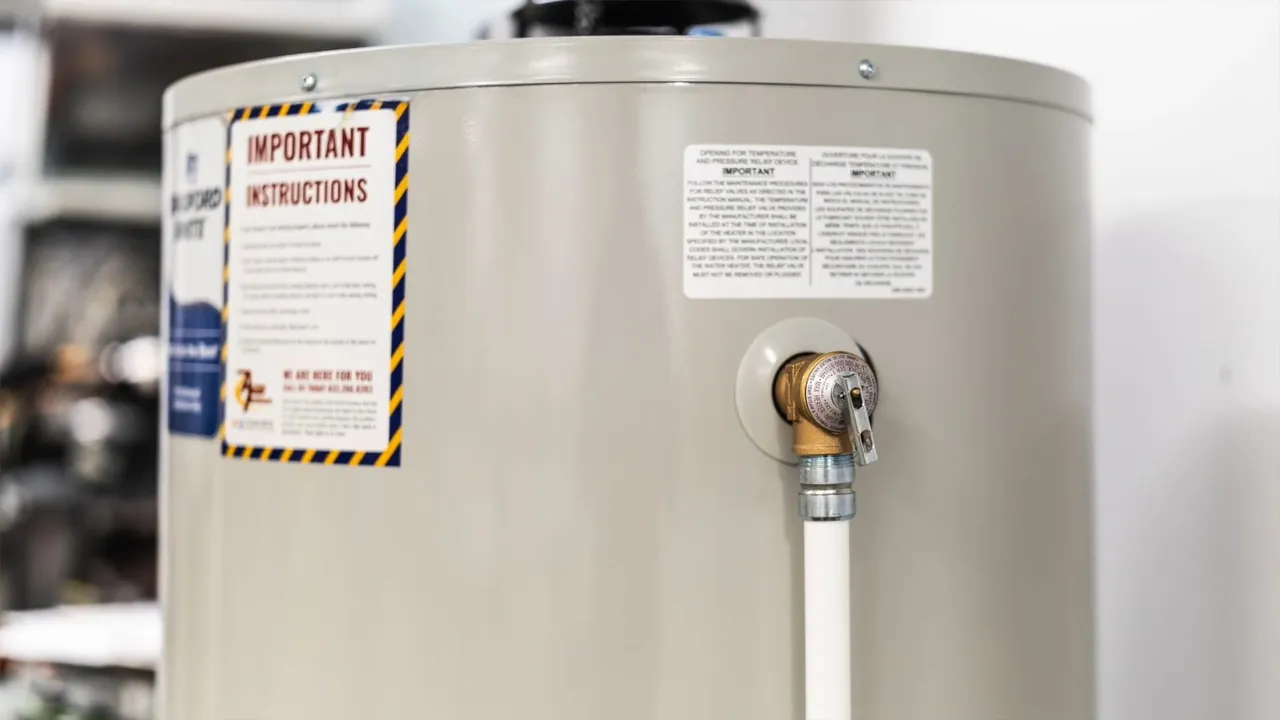
A water heater that performs perfectly at sea level will underperform in Wheat Ridge. At 5,400 feet, the thinner air reduces the combustion capacity of a gas water heater, and a unit sized using sea-level calculations will struggle to keep up with a household's hot water demand. Getting the sizing right means accounting for altitude from the start.
Most water heater sizing advice you will find online assumes sea-level conditions, because that is where most of the country lives. But Jefferson County sits at high elevation, and the physics of gas combustion at altitude have real consequences for water heater performance. Whether you are replacing a failing unit or planning ahead, understanding altitude deration and the local water chemistry helps you choose a water heater that actually meets your household's needs.
What Altitude Does to a Gas Water Heater
Gas water heaters generate heat by burning natural gas, and combustion requires oxygen. At higher elevations, the air is less dense, so a given volume of air contains less oxygen than the same volume at sea level. To prevent incomplete combustion, gas appliances are derated at altitude, meaning their input is reduced. Industry standards generally call for derating gas appliance input by approximately 4 percent for every 1,000 feet above 2,000 feet of elevation.
At Wheat Ridge's elevation of approximately 5,400 feet, this works out to a deration of roughly 14 percent from the sea-level rated input. A water heater rated at 40,000 BTU per hour at sea level effectively operates at closer to 34,000 BTU per hour in Wheat Ridge. That reduction in heating input directly affects how quickly the water heater can heat water and how well it keeps up with sustained demand.
The Practical Consequence
A water heater sized for a family's hot water needs at sea level may run out of hot water during back-to-back showers in Wheat Ridge, because its effective heating capacity is about 14 percent lower than its nameplate suggests. The fix is to account for deration when sizing, not to discover the shortfall after installation.
Sizing the Right Capacity
Water heater sizing depends on two main factors: the tank capacity (how much hot water is stored) and the recovery rate (how quickly the unit reheats incoming cold water). At altitude, the derated heating input slows the recovery rate, which matters most during periods of sustained demand. A household with several bathrooms and simultaneous hot water use needs a unit whose derated recovery rate still meets peak demand.
For a tank water heater, this often means selecting a unit one size larger than a sea-level calculation would suggest, or choosing a model with a higher input rating to compensate for the deration. For tankless water heaters, which heat water on demand rather than storing it, the altitude deration affects the maximum flow rate of hot water the unit can deliver, and the sizing must account for this reduced capacity. We work through these calculations for your specific household when sizing a replacement. You can find more detail on our water heater repair and replacement page.
Planning a water heater replacement in Wheat Ridge? We'll size it correctly for 5,400-foot altitude and your household's actual demand.
Call (303) 567-7524 · 24/7How CMWC Water Chemistry Affects Your Water Heater
Beyond altitude, the water chemistry in Wheat Ridge influences water heater performance and lifespan. Consolidated Mutual Water Company supplies most of Wheat Ridge with water drawn from Clear Creek and Denver Water facilities. This water carries mineral content that contributes to sediment accumulation in tank water heaters and scale buildup in tankless heat exchangers.
In a tank water heater, dissolved minerals settle to the bottom of the tank as sediment over time. This sediment layer insulates the water from the burner below it, forcing the unit to work harder and longer to heat the water, which reduces efficiency and shortens the tank's lifespan. Sediment buildup also contributes to the popping and rumbling sounds that aging water heaters make. Annual tank flushing removes accumulated sediment and is the single most effective maintenance step for extending water heater life in Wheat Ridge.
In a tankless water heater, the same minerals form scale on the heat exchanger surfaces, reducing heat transfer efficiency and, if left unaddressed, eventually damaging the unit. Tankless water heaters in Wheat Ridge benefit from periodic descaling to remove this scale buildup. The frequency depends on usage and the specific mineral content, but annual descaling is a reasonable baseline for the area.
Gas vs. Electric at Altitude
Altitude deration applies specifically to gas combustion appliances. Electric water heaters, which heat water with resistance elements rather than combustion, are not subject to altitude deration in the same way. This does not automatically make electric the better choice in Wheat Ridge, because electric water heaters generally have slower recovery rates than gas units to begin with, and the operating cost comparison depends on local utility rates. But it is a factor worth considering when deciding between fuel types for a replacement.
For homeowners weighing the options, the right choice depends on the existing infrastructure (whether the home has a gas line to the water heater location), the household's hot water demand pattern, and the relative costs of gas and electricity. We help Wheat Ridge homeowners think through this decision as part of any water heater replacement assessment.
Signs Your Current Water Heater Is Undersized for Altitude
If your water heater was not sized with altitude in mind, the symptoms are usually about running out of hot water rather than complete failure. The most common complaint is hot water that runs out during back-to-back showers, or that cannot keep up when a shower and the dishwasher or laundry run at the same time. Another sign is a noticeably long recovery period after heavy use, where the household has to wait an extended time for hot water to return.
These symptoms are easy to misattribute to a failing water heater when the real issue is that the unit is simply too small for the household's demand at Wheat Ridge's altitude. Before replacing a water heater that seems to be underperforming, it is worth confirming whether the existing unit is appropriately sized in the first place. Replacing an undersized unit with another unit of the same capacity reproduces the same problem. We assess both the condition and the sizing adequacy when evaluating a Wheat Ridge water heater.
Venting Considerations at Altitude
Altitude affects more than just the heating capacity of a gas water heater. The reduced air density at 5,400 feet also influences the draft and venting of combustion gases. Gas water heaters rely on proper venting to safely exhaust combustion byproducts, and the venting must be configured correctly for the installation environment. When a water heater is replaced, the venting configuration should be verified as part of the installation, not assumed to be correct because the previous unit was vented the same way.
This matters particularly in older Wheat Ridge homes where water heaters may share venting with other appliances or use venting configurations that predate current standards. A proper installation accounts for the altitude, the specific venting requirements of the new unit, and the configuration of the existing flue or vent. We verify venting as part of every water heater installation in Wheat Ridge to ensure safe operation.
Key Takeaways
- At Wheat Ridge's 5,400-foot elevation, gas water heaters are derated about 14 percent from sea-level capacity.
- A unit sized using sea-level calculations may run short of hot water during peak demand.
- CMWC water chemistry causes sediment in tanks and scale in tankless units; annual maintenance extends lifespan.
- Correct sizing accounts for both altitude deration and household demand from the start.
If you are planning a water heater replacement in Wheat Ridge or anywhere in Jefferson County, sizing it correctly for the altitude and local water chemistry is the difference between a unit that meets your needs and one that disappoints. We size and install water heaters correctly for the Front Range, and we are available 24/7 for water heater emergencies. Call (303) 567-7524.