When a Wheat Ridge sewer lateral fails, there are two main repair paths: cured-in-place pipe (CIPP) lining, which rehabilitates the existing pipe without major excavation, and open excavation, which digs up and replaces the failed pipe. Each is the right answer in different situations, and the camera inspection that precedes any repair is what determines which one fits.
The sewer lateral is the buried pipe carrying waste from your home to the city sanitation main. In Wheat Ridge's older neighborhoods, these laterals are often original clay tile or cast iron, decades old, and subject to root intrusion, joint failure, and collapse. When one fails, the repair method matters: it affects the cost, the disruption to your yard, and the durability of the result. Understanding the two approaches helps you make sense of the recommendation you receive.
Start With a Camera Inspection
No sewer lateral repair decision should be made without a camera inspection first. The camera reveals the specific nature and location of the problem and, crucially, the structural condition of the pipe. This last point is what determines whether lining is even an option. CIPP lining requires a host pipe that is structurally intact enough to support the liner. A pipe that has collapsed or has large sections missing cannot be lined, while a pipe that is cracked or root-infiltrated but still structurally continuous often can be. Our sewer camera inspection service provides the assessment that drives this decision.
How CIPP Lining Works
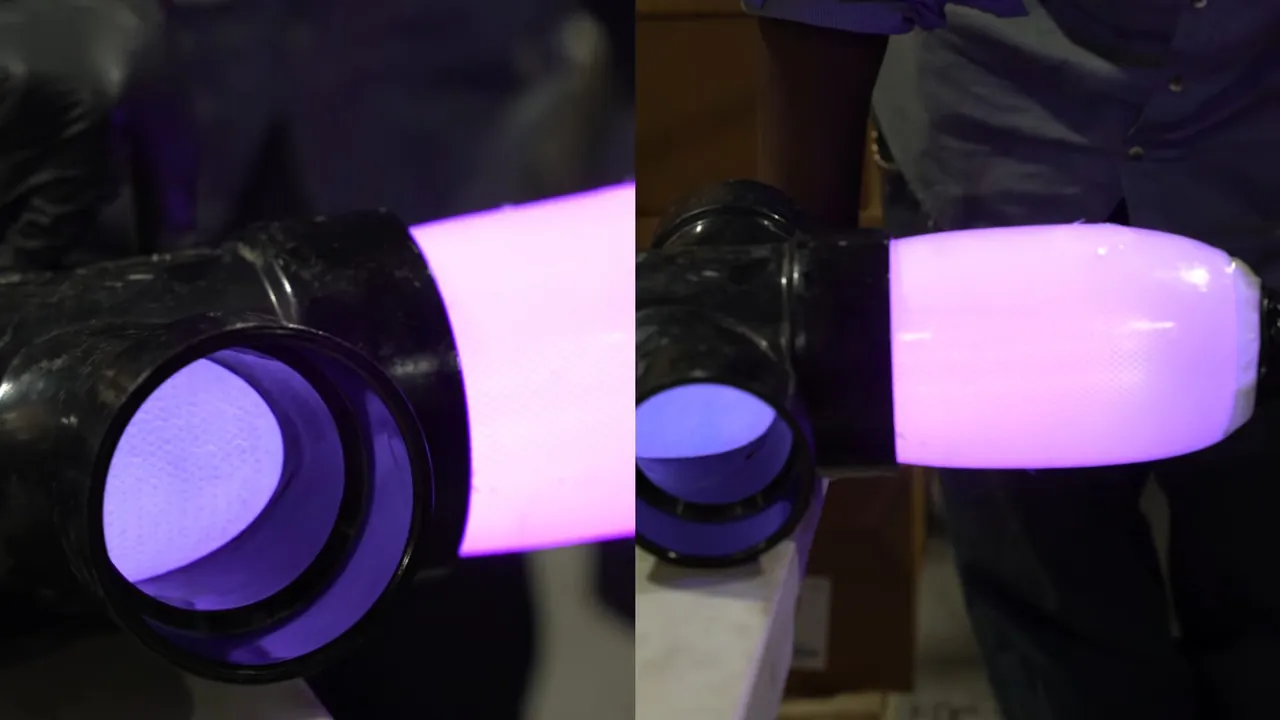
Cured-in-place pipe lining rehabilitates an existing pipe from the inside. A flexible liner saturated with resin is inserted into the host pipe, typically through an existing access point, then inflated to press against the pipe wall and cured in place. The cured liner forms a new, continuous, jointless pipe within the old one. Because the new liner has no joints, it eliminates the joint gaps that allow root intrusion, and its smooth interior surface improves flow.
The major advantage of CIPP lining is that it is trenchless, meaning it does not require excavating the length of the lateral. This avoids tearing up the yard, driveway, landscaping, or hardscaping that the lateral runs beneath. For a Wheat Ridge home with a mature landscaped yard or a lateral running under a driveway, this is a significant benefit. Our trenchless sewer repair service covers CIPP lining for suitable laterals.
When Lining Is the Right Choice
CIPP lining suits laterals that are structurally continuous but have problems lining can solve: root intrusion through joints, minor cracks, and joint separation. The pipe must be intact enough to host the liner, and the camera inspection confirms whether it qualifies.
How Open Excavation Works
Open excavation is the traditional method: dig down to the failed section of pipe, remove it, and install new pipe in its place. For sewer laterals, the replacement pipe is typically PVC, which is durable, corrosion-resistant, and jointless in the relevant sense (its joints are solvent-welded and do not admit roots the way old clay tile joints do). Once the new pipe is installed and connected, the excavation is backfilled.
Excavation is more invasive than lining, requiring a trench along the path of the lateral and restoration of whatever was above it. But it is the necessary and reliable method when the pipe condition rules out lining. Our sewer line repair service handles excavation-based lateral replacement for Wheat Ridge homes.
Not sure whether your Wheat Ridge lateral needs lining or replacement? We inspect first, then recommend the method that fits the actual condition.
Call (303) 567-7524 · 24/7When Excavation Is the Right Choice
Excavation is the appropriate method in several situations. A collapsed lateral cannot be lined, because there is no continuous host pipe to support the liner, so it must be excavated and replaced. A lateral with significant bellying, where a section has sagged below grade and accumulates waste, generally needs excavation to correct the grade, because lining follows the existing pipe path and does not fix a belly. A lateral with large missing sections or severe structural failure at multiple points also calls for replacement rather than lining.
In Wheat Ridge's oldest homes, where clay tile laterals may be 90 to 100 years old, the camera inspection sometimes reveals deterioration severe enough that excavation and full replacement is the only reliable option. This is more common in the pre-1940 housing stock, where the laterals have endured the longest exposure to root pressure and soil movement.
Comparing the Two Approaches
Disruption
CIPP lining is far less disruptive, avoiding the trench that excavation requires. For homes with established landscaping, driveways, or hardscaping over the lateral, this difference is significant. Excavation requires digging and subsequent restoration of the surface.
Durability
Both methods, properly executed, produce a durable, long-lasting result. A CIPP liner in a suitable host pipe and a new PVC pipe from excavation both carry long service lives and resist the root intrusion that plagued the original clay tile or cast iron.
Applicability
This is where the methods diverge most. Lining is only possible when the host pipe is structurally suitable. Excavation works in any situation, including those where lining is impossible. The camera inspection determines which options are actually available for your specific lateral.
The Decision Is Driven by Condition, Not Preference
The most important thing to understand is that the choice between CIPP lining and excavation is not primarily a matter of preference or even cost. It is driven by the condition of the pipe. A structurally sound lateral with root intrusion is a candidate for lining. A collapsed or severely bellied lateral requires excavation. The camera inspection establishes which situation you are in, and the appropriate method follows from that. A reputable assessment leads with the inspection and recommends the method that fits the actual condition, rather than defaulting to one approach regardless of circumstances.
Questions to Ask Before Any Sewer Lateral Repair
When you receive a recommendation for sewer lateral repair, a few questions help confirm that the approach fits your situation. First, ask whether a camera inspection was performed and what it showed, because the recommendation should be grounded in the documented pipe condition rather than assumption. Second, ask why the recommended method was chosen over the alternative, which should have a clear answer based on the pipe's structural condition. Third, for a lining recommendation, ask whether the host pipe is structurally suitable, and for an excavation recommendation, ask what specifically rules out lining.
These questions are not about second-guessing the plumber. They are about confirming that the decision is driven by the actual condition of your lateral. A thorough assessment welcomes these questions because the answers are straightforward when the inspection has been done and the recommendation follows from it. If the answers are vague or the inspection was skipped, that is a signal to seek a clearer assessment before committing to a repair.
What Happens to the Old Pipe
One practical difference between the two methods is what becomes of the original pipe. In CIPP lining, the original pipe stays in place and becomes the outer shell around the new liner, so nothing is removed from the ground. In excavation, the failed section of original pipe is removed and replaced with new PVC. For most homeowners this distinction does not matter much in practice, but it occasionally comes up when there are questions about pipe location or future access. In both cases, the result is a functional, durable sewer lateral that resolves the failure that prompted the repair.
Key Takeaways
- A camera inspection must precede any sewer lateral repair decision, because it determines what is possible.
- CIPP lining rehabilitates a structurally sound pipe trenchlessly, ideal for root intrusion and minor cracks.
- Excavation replaces the pipe and is required for collapse, significant bellying, or severe structural failure.
- The choice is driven by pipe condition, not preference; the inspection establishes which options apply.
If you have a sewer lateral problem in Wheat Ridge, the path forward starts with a camera inspection to understand the actual pipe condition. From there, we recommend CIPP lining or excavation based on what fits. We serve all of Jefferson County and are available 24/7. Call (303) 567-7524.