Wheat Ridge, CO · No-Dig Sewer Solutions
Trenchless Sewer Repair in Wheat Ridge, CO: CIPP Lining and Pipe Bursting for Jefferson County Laterals
Wheat Ridge's established neighborhoods have mature landscaping, paved driveways, fencing, and decorative hardscaping over aging sewer laterals. Trenchless methods repair those laterals without destroying the surface above them. Call (303) 567-7524 to schedule a camera assessment.
What Makes Trenchless Repair Valuable in Wheat Ridge
Wheat Ridge's older residential neighborhoods have a characteristic that makes traditional sewer repair especially disruptive: decades of established landscaping, mature trees and shrubs, paved driveways, and decorative hardscaping laid directly over the sewer lateral path from home to street. In a neighborhood where a homeowner has invested in a stamped concrete driveway, flagstone walkway, or mature perennial beds over the past 30 years, traditional sewer repair requiring a full excavation trench across that path creates a secondary problem on top of the original plumbing problem.
Trenchless repair methods address the lateral from two access points at the ends of the affected section, using the old pipe as a guide path or sacrificial structure, without requiring continuous surface removal between those points. The surface above the lateral is preserved except for small excavation pits at the access points, which are easier to restore after the repair. This is not universally less expensive than open excavation, but when the surface value being preserved is significant, the total cost including surface restoration often makes trenchless the better economic choice.
Wheat Ridge's Tree City USA designation also means that sewer laterals frequently run beneath root zones of mature trees that excavation would damage. Trenchless methods protect those root systems and the trees above them. We assess each situation individually and provide cost comparison between trenchless and open excavation so you can make an informed decision based on your specific property and lateral condition.
Trenchless Repair at a Glance
Cured-in-Place Pipe Lining for Jefferson County Sewer Laterals
Understanding the CIPP Process
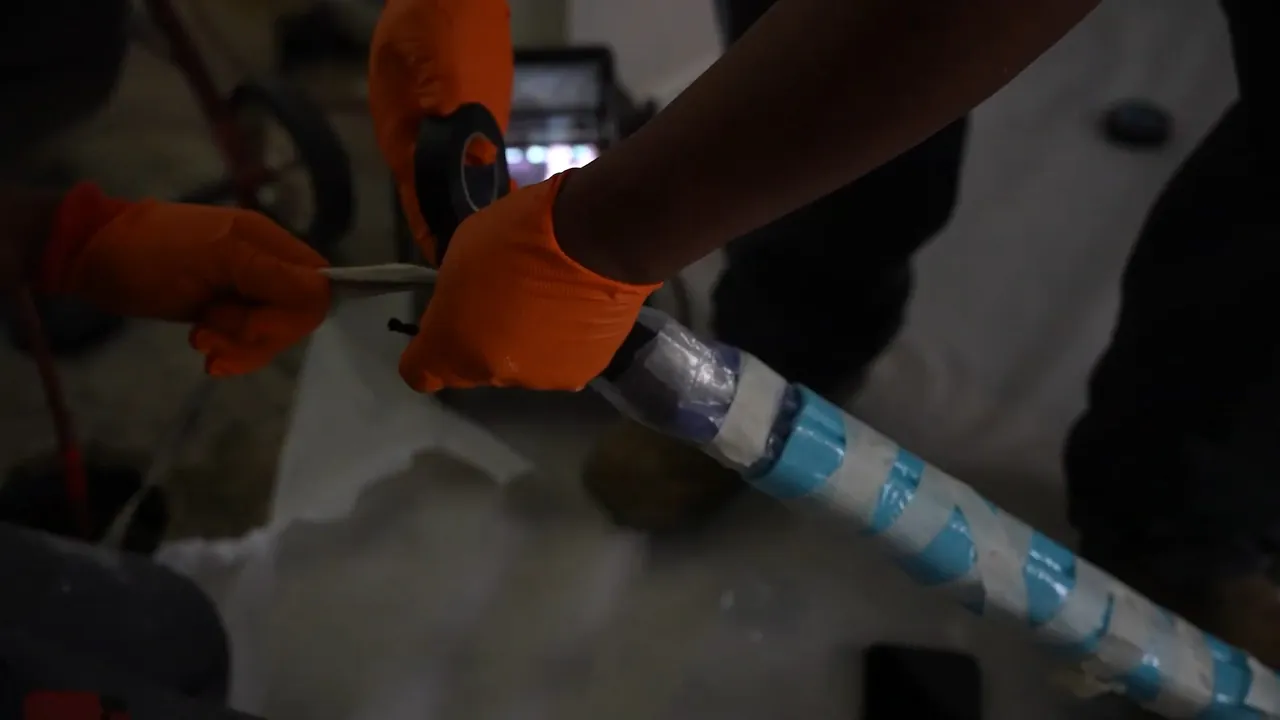
Cured-in-place pipe (CIPP) lining begins with thorough cleaning of the existing lateral by hydro jetting to remove roots, scale, and debris. A camera inspection confirms the pipe condition and identifies any sections that cannot be lined due to collapse or severe joint offset. A felt or fiberglass liner tube, pre-saturated with epoxy resin, is then inserted into the lateral from an access point and inverted or pulled into position to coat the full interior of the existing pipe. The liner is inflated with air to press it against the host pipe walls, and the resin is cured using UV light, steam, or ambient temperature depending on the system used.
After curing, the liner forms a new smooth pipe inside the old pipe, with an interior surface that is chemically inert and has no joints for roots to enter. The finished lined pipe typically has an inside diameter 6 to 12 percent smaller than the original pipe depending on the host pipe size and liner thickness, but the smooth interior surface often improves flow capacity compared to a rough, partially obstructed clay tile or cast iron lateral. CIPP is appropriate for laterals with root intrusion, minor cracking, and degraded but intact pipe walls. It is not appropriate for collapsed sections, severe belly sections, or heavily offset joints.
Pipe Bursting in Wheat Ridge: When and How It Works
How Pipe Bursting Works
Pipe bursting uses a hydraulic bursting head, pulled through the old pipe by a cable attached to a pulling machine in a receiving pit at the other end. As the bursting head travels through the old pipe, it fractures the existing pipe outward into the surrounding soil while simultaneously pulling a new HDPE pipe into the space created. The result is a new pipe in the same location as the old one, installed without continuous excavation. Pipe bursting works well for clay tile and older cast iron laterals where the host pipe is round enough and continuous enough to guide the bursting head, even if it is severely deteriorated.
Pipe bursting in Wheat Ridge requires excavated access pits at each end of the section being replaced. The pulling machine sits in the receiving pit at the downstream end, and the bursting head and new pipe are fed from the launch pit at the upstream end. In most residential Wheat Ridge properties, the receiving pit is at the property line or street right-of-way connection point, and the launch pit is near the foundation. The pits are typically 3 to 5 feet in each dimension, significantly smaller than the continuous trench required for open excavation of the full lateral run.
Choosing Between Trenchless and Open Excavation in Wheat Ridge
Trenchless methods are not universally superior to open excavation. The right choice depends on the lateral condition, the surface above it, and the cost comparison for the specific situation. CIPP lining is not appropriate for laterals with belly sections, because the liner conforms to the existing grade and the pooling problem remains. Pipe bursting is not appropriate for laterals with significant offset joints or adjacent utilities in close proximity to the bursting path. Where the lateral has multiple problems at different points along its run, open excavation and replacement provides complete control over the new pipe grade and routing.
We assess each Wheat Ridge sewer lateral situation through camera inspection before recommending a repair method. The camera shows pipe material, interior condition, root intrusion extent, belly locations, and joint status along the full run. That information tells us whether CIPP, pipe bursting, or open excavation is the technically appropriate choice. We then present the cost comparison so you can factor in the value of the surface preservation trenchless provides against the potentially higher material cost relative to open excavation in some cases.
For properties in Wheat Ridge where the lateral condition rules out trenchless methods, our sewer line repair service covers the full open excavation approach with proper grade restoration and new PVC lateral installation. The goal is a permanent fix, and we recommend the method that achieves that goal most cost-effectively for your specific situation.
Further Reading
Trenchless repair is one approach to sewer lateral problems. For a full overview of sewer line issues specific to Wheat Ridge, including why Tree City USA root intrusion is a particular concern: How Tree Roots Invade Sewer Lines in Wheat Ridge's Tree City USA Neighborhoods.
Common Questions
Frequently Asked Questions
Sewer Lateral Problem in Wheat Ridge? Ask About Trenchless Options.
Camera inspection first, then a clear recommendation on whether CIPP lining, pipe bursting, or open excavation fits your specific Wheat Ridge lateral condition and property. Available 24/7 throughout Jefferson County.
Call (303) 567-7524 · Available 24/7