
Wheat Ridge, CO · Jefferson County
Leak Detection in Wheat Ridge, CO: Finding Hidden Plumbing Leaks in Jefferson County Homes
Hidden plumbing leaks in Wheat Ridge's older homes can go undetected for months while causing structural damage and mold growth. We use electronic detection and pressure testing to locate leaks accurately before opening walls or floors.
Types of Plumbing Leaks We Detect in Wheat Ridge
Supply Line Leaks
Galvanized supply line leaks in Wheat Ridge's pre-1955 homes often begin at threaded fittings where the zinc coating has fully corroded and the underlying steel is weakened. These leaks may be slow at first, weeping at a fitting joint and saturating insulation in the crawlspace or wetting the subfloor above before being detected. Copper supply lines, more common in homes built after 1960, can develop pinhole leaks from the mineral content of Consolidated Mutual Water Company water over extended periods. Both types of supply line leaks cause ongoing structural damage until repaired.
Drain and Sewer Leaks
Drain line leaks differ from supply line leaks in that they only release water during drain use rather than continuously. In Wheat Ridge's pre-1955 homes with aging cast iron drain systems, leaks at corroded joints or rust-through sections release wastewater into the crawlspace or basement structure during every shower, toilet flush, or drain use. Drain leaks often present as unexplained mold in crawlspace insulation, persistent moisture smell from the basement, or water staining on basement ceilings below upper-floor drains.
Irrigation and Exterior Line Leaks
Irrigation system leaks and exterior water line leaks between the meter and the house release water into the soil and do not affect interior fixtures directly. Signs include soft or wet areas in the yard not explained by recent precipitation, a water meter that shows usage when all interior fixtures are off, or unexpectedly high water bills during periods of normal use.
Signs You May Have a Hidden Leak
Electronic Leak Detection Methods We Use in Jefferson County
Acoustic leak detection uses amplified listening equipment to identify the sound of water escaping a pressurized pipe through soil or building structure. This is effective for supply line leaks under concrete or in walls where the leak location is not visually accessible. We use acoustic sensors at different points along the suspected pipe run to triangulate the leak location, minimizing the exploratory opening required to access and repair it.
Pressure testing involves isolating pipe sections and checking whether pressure holds or drops over a defined period. A section that loses pressure indicates a leak somewhere in that isolated run, and we then narrow the location by testing shorter segments. Pressure testing is particularly useful for confirming whether a leak exists before opening finished surfaces, and for testing a repaired section to confirm the repair is successful.
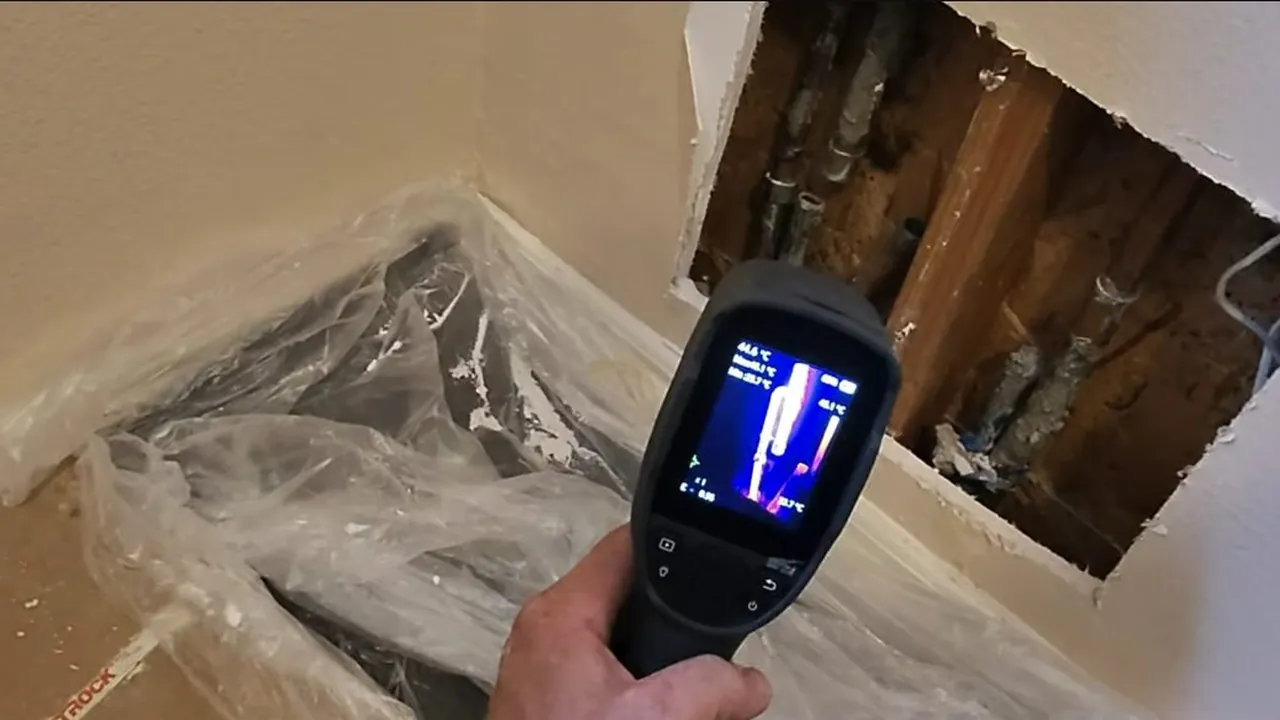
Moisture meters and thermal imaging cameras can reveal hidden moisture in walls and floors caused by a leak without requiring acoustic equipment. These tools are useful for confirming suspected leak locations and assessing the extent of moisture infiltration when a leak has been active for a period before detection.
Leak Detection Challenges in Wheat Ridge's Pre-1955 Housing Stock
Older Wheat Ridge homes present specific leak detection challenges that newer construction does not. Galvanized supply lines with long-standing scale buildup may have multiple simultaneous small leaks at degraded fittings throughout the crawlspace, making it difficult to identify and repair all leak points without an inspection of the full supply system. In these situations, the most cost-effective path is often assessing whether individual leak repair or full supply repiping is the appropriate response.
Cast iron drain leaks in pre-1955 homes are often diffuse, with moisture seeping through corroded pipe walls or degraded lead-caulked joints at multiple points along a drain run rather than from a single clearly defined leak point. Camera inspection of the drain system is the appropriate diagnostic tool for suspected drain leaks, as it identifies the pipe sections contributing to the moisture problem without requiring extensive structural opening.
For homes in Wheat Ridge's Crown Hill area and other locations where clay soil retains moisture near the foundation, distinguishing between a plumbing leak and groundwater infiltration is an important diagnostic step. We assess the situation systematically before recommending either plumbing repair or waterproofing, since treating the wrong cause delays resolution of the actual problem.
What Happens After We Find the Leak in Your Wheat Ridge Home
Once we identify the leak location and source, we provide a repair estimate and explanation of the scope of work before beginning any repair. For a single fitting leak on a galvanized supply line, the repair may be straightforward. For a leak that reflects broader system deterioration, we explain what the leak indicates about the overall pipe condition and whether targeted repair or a broader approach is the better value over the medium term.
We do not open finished surfaces without your agreement on scope and approach. If the leak location determination requires opening a wall or floor, we describe exactly what will be opened and how the area will be restored after the repair. Leak repair and surface restoration are both included in the scope we provide before beginning work.
For pre-1955 Wheat Ridge homes where a detected leak is one symptom of a broader galvanized supply or cast iron drain system that is approaching end of life, we provide context on what the broader system assessment shows. Some homeowners choose targeted repair to address the immediate leak, with full repiping scheduled for a later date. Others use the detection visit as the catalyst to address the underlying system rather than cycle through repeated individual repairs. We present both options with honest cost and longevity assessments so you can decide which path makes sense for your situation and timeline.
Further Reading
Hidden leaks in Wheat Ridge homes are sometimes connected to aging cast iron drain systems. For more on cast iron drain deterioration symptoms: Signs Your Wheat Ridge Home Has Cast Iron Drain Problems.
Common Questions
Frequently Asked Questions
Suspect a Hidden Leak in Your Wheat Ridge Home? Call for Leak Detection.
We use acoustic detection, pressure testing, and moisture assessment to locate leaks accurately before opening walls or floors. Available throughout Wheat Ridge and Jefferson County.
Call (303) 567-7524 · Available 24/7